Showing posts with label CSS Florida. Show all posts

Friday, June 21, 2013

CSS Florida Spawns a Baby

Lieutenant Charles Read, CSN
Throughout the Spring and Summer of 1863, the cruiser CSS Florida continued to have success in locating and destroying U.S.-flagged merchant ships.  After the capture of the Jacob Bell in March, John Maffitt and Florida captured several more ships along the East Coast, including the converted whaling ship Onedia on its way home to New Beford, MA from China.   Between the combined efforts of CSS Alabama and CSS Florida, New England newspapers such as the New Bedford Standard demanded the resignation of Secretary of the Navy Gideon Welles.

When Florida captured the bark Clarence, one of Maffitt's more aggressive junior officers, Lieutenant Charles Read, proposed to his captain that he be allowed to command Clarence.  With a few guns, Read intended to take the war to the Yankees by raiding their ports.  Maffitt agreed, gave him one gun, and a "junior" cruiser was born.  Florida headed east for France for repairs.  Clarence headed north.   

Read's original plan to was to use Clarence's papers to sneak into Hampton Roads and either capture a U.S. Navy gunboat or burn merchant ships in the harbor.  But, he wisely reconsidered the foolish plan.  He second idea was to sail to New England and hit Yankee merchants in their own back yard.  This raid began on June 12, 1863, when Read captured the bark Tacony off the coast of the Virginia Capes.  The raid alerted the U.S. Navy that Confederate cruisers were dangerously close.  A dozen ships were deployed to look for them.  Before the raid was over, Read burned twenty-two fishing schooners and a U.S. Revenue Cutter.  He surrendered when a band of armed citizens joined with soldiers from the 7th Maine Volunteers in Portland, Maine.  They mobilized a small fleet and chased after Read's ship.

 More than any other Confederate raider, Read truly brought the war home to New England merchant owners.  In the end, this is what the guerre de course strategy was suppose to do: make the war too expensive for the upper class merchants to want to continue the war.

During the Spanish-American War, Captain Casper Goodrich published a study in the Proceedings of the Naval Institute on Read's raid and the Navy's reaction to it on how not to stop a commerce raider.  Goodrich produced the following maps.  Read's ship is highlighted by the arrow.  All other names are U.S. Navy and Revenue Cutter vessels searching for him.

Situation map: June 12, 1863 (left) and June 14, 1863 (right) (click to enlarge)


Situation map: June 16 (left) and June 17 (right) (click to enlarge)

By June 21 (left), Read had successfully destroyed several fishing
vessels off the coast of Maine.  He transferred to his command to a
fishing schooner called Archer. By June 27, he captured the
USRC Caleb Cushing before surrendering. 

Tuesday, February 26, 2013

CSS Florida Catches the Big One


When CSS Florida successfully made her break from Mobile, she headed towards Havana, where she captured one small vessel in the process.  After refueling in port, Florida headed back out to sea and captured two more vessels before steering east to Nassau, Bahamas.

Upon leaving Nassau, Captain John Maffitt's intentions were to take the war directly to Yankee merchants in New England waters.  This was a risky proposition at best, as the U.S. Navy established routine patrols in the Grand Banks after Alabama's Gulf Stream raids. There was also the risk of steaming right into the heavy traffic areas of Cape Hatteras and the Virginia Capes.  Maffitt understood the only way the southern guerre de course strategy would work was if the northern merchant class saw their property destroyed up close.  

As Florida approached Cape Hatteras, the cruiser encountered a major storm.  Maffitt attempted to tough it out, but eventually ordered a retreat back south towards the West Indies.  His decision paid off in a big way. After fooling what he believed to be the large steam warship USS Vanderbilt, a watch spotted a large sailing vessel on the morning of 12 February.   The cruiser sighted, chased, and overtook the New York-based ship off the coast of Puerto Rico. Owned by Abiel Abbow Low and Brothers, Jacob Bell was one of four well-designed clipper ships Low used to import black tea (and occasionally opium) directly from the Chinese port of Foochoo. 

Maffitt reported that Jacob Bell had over 17,000 cases of tea in her hold, valued at over $1.5 million (1863 dollars). Along with six boxes of coffee, Maffitt kept fifteen cases and had the rest burned.  He forwarded the captured tea and coffee to Richmond aboard the blockade runner Robert E. Lee.  Maffitt expressly requested that the tea and coffee be distributed to soldiers in the Army of Northern Virginia. There are two excellent account of the captures.  One is from Maffitt's official report.  The other is from Jacob Bell's vantage point in the book, written by the wife of ambassador to China.  She was coming home from China when Florida stopped her ship.  Needless to say, she and Maffitt had words.  However, by the time Maffitt found a neutral ship to off load his "guests," Mrs. Williams and Maffitt left on good terms. 

Artifacts from this capture can be seen at the Hampton Roads Naval Museum.

Sunday, January 13, 2013

CSS Florida Escapes Out of Mobile Bay

CSS Florida during the height of her career. Image source: US Navy History and Heritage Command

After being partially outfitted in the Bahamas, the Confederate raider CSS Florida (a.k.a., “Oreto”) made a bold and audacious dash into Mobile Bay in September 1862 (post by Gordon in Sept. 2012). A large portion of the crew, including commander John Newland Maffitt, were stricken with yellow fever. Maffitt was so weak from the sickness he had to be lashed up to keep upright to direct the ship. After receiving a hero’s welcome in Mobile Bay, a two-week quarantine period had to be enforced before the ship could sail up to the docks at Mobile for repair and refitting. During this time in Mobile, Maffitt recruited additional officers, engineers, and crewmen to give his vessel a full complement.

By January 1863, Florida was ready to begin her predatory career. Seven USN gunboats patrolled the mouth of Mobile Bay (USS Susquehanna, Oneida, R. R. Cuyler, Pembina, Aroostook, Kennebec, and Pinola). Early on the morning of 16 January, Maffitt made his move. Under cover of heavy mists (but with strong winds blowing), he slipped by five blockaders (literally duplicating his trip into the Bay, when he evaded two out of 3 gunboats) before he was sighted. The officer commanding the Union blockaders, Commodore R. B Hitchcock, issued specific orders regarding signals to be used if the raider was sighted, and which ships should give chase, but the various ship captains’ reports in the ORN suggest that some confusion reigned as the Florida ran through the blockading vessels (some were not even sure it was the Florida making a run for it).

Maffitt ordered all sail set, and Florida made 14 knots in the gale-force winds under a full spread of canvas and her engines at full speed ahead. The blockader USS Cuyler pursued Florida all that day. During this chase, Florida also slipped by several other outside blockade vessels, one believed to be the sloop USS Brooklyn (close enough that a broadside from the Union ship could have blown Florida out of the water), along with “a large armed ship” and a “fast gunboat”. Maffitt believed he was mistaken by these for one of their own gunboats. The chase continued into the evening. Realizing that his new, white sails showed up well in the dark, giving the pursuing gunboat an easy target to track, the wily officer in grey ordered all sails in and stopped engines. The ship drifted off with the wind and heavy seas in the dark and became “invisible” to the pursuing Cuyler, who continued after what they thought was the raider. After confirming that he eluded his pursuer, Maffitt headed south. The morning of 17 January dawned sunny and clear. Lookouts in the tops reported “Nothing in sight but sky and water.” The Florida had once again slipped the blockade and embarrassed the US Navy.

The “Official Records” of the Navies are an immense treasure trove of facts and information on actions of the Union and Confederate navies during the CW. That said, they can be pretty dry and not exactly compelling reading. However, if you look carefully, occasionally a real gem pops up: in one of his reports to Commodore Hitchcock after the “Florida incident,” Cdr. George F. Emmons of the Cuyler noted laconically “From fancying myself near promotion in the morning, I gradually dwindled down to a court of enquiry at dark, when I lost sight of the enemy.” How much better can it be said??

Many thanks to Gordon for providing a link to “The Life and Services of John Newland Maffitt” on Googlebooks. Published by Maffit's widow, it includes extensive excerpts from his letters, reports, and diary from throughout his career, and was a wealth of information for this post.

Friday, September 21, 2012

CSS Florida's Mad Dash into Mobile

To say Confederate Lieutenant John Newland Maffitt had a tough decision to make would be an understatement.  After the Florida's release from a British admiralty court in Nassau, Maffit's executive officer reported their vessel lacked the proper equipment to fire the main guns.   After being denied the equipment in Havana, Cuba, Maffitt decided the only thing to do was to run the blockade and make port in Mobile, Alabama.  Adding to Maffitt's difficulties was yellow fever.  The dreaded tropical disease had incapacitated or killed half of his company, including Maffitt.  This decision caused Florida's executive officer, Lieutenant John Stribling, to question his captain's wisdom.  He commented to Maffitt, "Sir, in this attempt we cannot avoid passing close to the blockade-squadron, the result of which will be our certain destruction."

George Prebble after the war
Maffitt acknowledged the risks, but felt he had no choice.  Watching the approaches to Mobile were the steam sloop-of-war USS Oneida (commanded by Commander George H. Prebble), the "90-day gunboat" USS Winona, and the fast sailing schooner USS Rachel Seaman. 

With a British flag raised, Florida approached the blockading squadron at high speed.  Florida and Oneida passed within 90 yards of each other before Prebble realized the ruse.  Oneida opened fire at Florida, but missed.  Winona joined in and put an XI-inch shot into Florida's boiler room, decapitating one of the fireman and injuring several others.   Florida continued steaming.  The two U.S. Navy ships switched over to shrapnel shot in an attempt to take out Florida's sails.  The shrapnel injured several more of Florida's sailors, but failed to stop the cruiser from making it to the safety of Fort Morgan. 

Maffitt was safe.  Prebble, however was not. Upon hearing about the incident via Farragut and Welles, President Lincoln personally ordered Prebble to be removed from command and dismissed from the Navy.  Welles wrote a letter informing Prebble of his dismissal.  Being what communications were in 1862, Prebble learned about his firing in a newspaper article. 

Prebble was furious and fought the charges.  Coming from one of the U.S. Navy's most famous families (he was the nephew of Commodore Edward Prebble), he had major political clout to work with.  For the next six months, he sought to be reinstated.

Friday, September 14, 2012

Rear Admiral Wilkes and his Magical Flying Squadron


Steam sloop USS Wachusett

In mid-1862, Secretary of the Navy Gideon Welles had a serious problem on his hands.  Intelligence indicated that at least two Confederate cruisers (CSS Florida and Alabama) were either en route or already situated in the West Indies, with more on their way.   He could not ignore the problem of Confederate steam cruisers any longer. On September 8, 1862, he stood up the "West Indies Squadron."  The name itself was not new.  The Navy always maintained a squadron since the 1820s with that name, to handle real life "pirates of the Caribbean" that tended to pop up from time to time. 


Rear Admiral Charles Wilkes
Naval histories of the Civil War often referred to the squadron as "Wilkes' Flying Squadron," as it was supposed to react quickly to a Confederate cruiser sighting. The term was used frequently in the Age of Sail to refer to a squadron composed of light and fast warships.  The term "Flying" did not appear in Welles' letters until AFTER the war.  During the War, it was simply referred to as the "West Indies Squadron." 
Welles placed the intellectually brilliant, but obstinate, Commodore Charles Wilkes to be charge of the Squadron.  The appointment came with his promotion to "Acting Rear Admiral." Welles drew a few ships from each of the blockading squadrons to give Wilkses' squadron seven steamers: USS Wachusett, Dacotah, Cimarron, Sonoma, Tioga, Octorara,and Santiago de Cuba.  This gave Wilkes, two steam sloops, four double-ender gunboats, and one converted passenger steamer.  Many of them were powerfully armed with XI-inch Dahlgrens and 100-pounder Parrots.  Their speed, however, was  modest at best.   

Given Wilkes' history with boarding foreign flag ships (see the Trent Affair), Welles gave very specific orders on neutrals rights.  The one exception was British-flag ships suspected of participating in the slave trade.  After decades of discussion, the United States and Britain agreed to a mutual right of search treaty, allowing each side to search the other side's ships for slaves without need for further diplomatic follow up.
Paddle Steamer USS Cimarron

Upon arriving in the region with USS Wachusett, Wilkes and his ships began frequent port calls from Bermuda down to the southern end of the Lesser Antilles looking for Confederate cruisers.  Their strategy was one of "search-and-destroy;" that is, ships patrolled areas where cruisers were last seen.  This strategy stands in contrast to the more passive convoy strategy, where friendly merchant ships were escorted from Point A to Point B, challenging enemy cruisers to find them.  Wilkes, however, adopted the more aggressive strategy that proved a failure.  No Confederate cruisers were even spotted for several weeks.  His ships, however, discovered  the patterns of several blockade runners and ran many of them down.

Meanwhile, CSS Alabama was thousands of miles to the east in the Azores Islands.  On September 18, she wrapped her campaign there by burning her eighth U.S.-Flagged whaling ship in thirteen days.

Friday, August 3, 2012

CSS Florida is Commissioned and Puts to Sea


In late July, Confederate Lieutenant John Newland Maffitt arrived in Nassau, Bahamas aboard one of his blockade runners.  Soon after arriving, he received sealed orders to take command of the Oreto, anchored six miles from Nassau.  Raphael Semmes, late of CSS Sumter, also happened to be in town.  Maffitt handed him his own sealed orders to return to England and take command of a ship known only as No. 290 (future CSS Alabama). 

Maffitt was ready to take charge of his ship, except she had been placed under arrest by British authorities. Either because he was bribed by Federal agents or had a change of heart, one of his junior officers that helped bring Oreto over from Liverpool announced to British authorities that Oreto was truly a Confederate warship, thus in violation of Queen Victoria's neutral proclamation.

John Newland Maffitt
With Maffitt laying low and keeping out of sight, the local Admiralty court spent the next weeks investigating the claim.  Making matters worse, a serious yellow fever epidemic struck Nassau.  The epidemic struck Maffitt hard, but he still tried to make arrangements for his ship. 

On August 7, the British courts concluded that Orteo was not an armed ship and released her.  Only a few hours after the decision, Maffitt got out of bed and assembled his company on the ship.   Ideally, the ship needed 120 men.  Maffitt only had 22 on hand, some of whom were very ill.  Regardless, the ship slipped out of Nassau harbor at night to Green Quay.  Here, she met up with the British schooner Prince Alfred.  With a skeleton crew, the Confederate ship received her eight guns (two 7-inchs and six six-inches) and ordnance.  Maffitt declared that she was no longer Oreto, but the Confederate cruiser CSS Florida.  He made plans to raid Union shipping along the Gulf of Mexico and ordered his company to began training on the main guns.  At this point,  his executive officer, Lieutenant Stribling, made an unfortunate discovery.

In their haste to break out of Nassau and away from the U.S. Navy, Florida's company accidentally left naval artillery equipment like sponges and ram rods in storage.  As the ship would be totally helpless in combat, Maffitt changed his mind.  Instead of starting his raids, he decided to make for Mobile, Alabama and run the blockade.

Saturday, December 24, 2011

First Naval Engagement at Mobile Bay


Mobile Bay and the City of Mobile, Alabama, are seldom written or talked about in Civil War Naval History except in connection with the famous Battle of Mobile Bay in August 1864. I’ll be putting together a few posts on Mobile Bay, the city, and naval events transpiring there during the course of the war and leading up to the historic 1864 engagement.

On the first Christmas Eve of the war, 24 December 1861, the first naval battle at Mobile Bay was fought between the Confederate gunboat CSS Florida and the US Navy blockader USS Huntsville. The Confederate ship in this case was not the famed commerce raider, it was a civilian steamer seized by the state government and turned over to the CS Navy for conversion into a gunboat. The Florida ventured out from its anchorage near Fort Morgan and fired on the Huntsville that morning. The two ships dueled at long range for a bit less than an hour and inflicted little or no damage to one another, but the engagement did attract a considerable crowd of onlookers from Confederate Forts Morgan and Gaines and the adjacent USN blockading vessels.

The Mobile press reported elatedly (but incorrectly) that the Confederate gunboat scored a resounding victory against the Union blockader. Commander Cicero Price of the Huntsville noted in his after-action report to the Gulf Squadron Command that his smoothbore guns were entirely inadequate for the task and recommended his ship be refitted with better, rifled armament. The Florida was later renamed the CSS Selma (as shown on the illustration) and was a participant in the Battle of Mobile Bay.

Thanks to the Naval History and Heritage Command web site for the two illustrations of the naval ships involved, along with all the other resources they provide, and best wishes for the holidays and thanks to all the followers of this CWN 150 Blog.

Tuesday, November 29, 2011

New Images of USS Cumberland & CSS Florida Wrecks

USS Cumberland, starboard side

USS Cumberland, bow looking forward

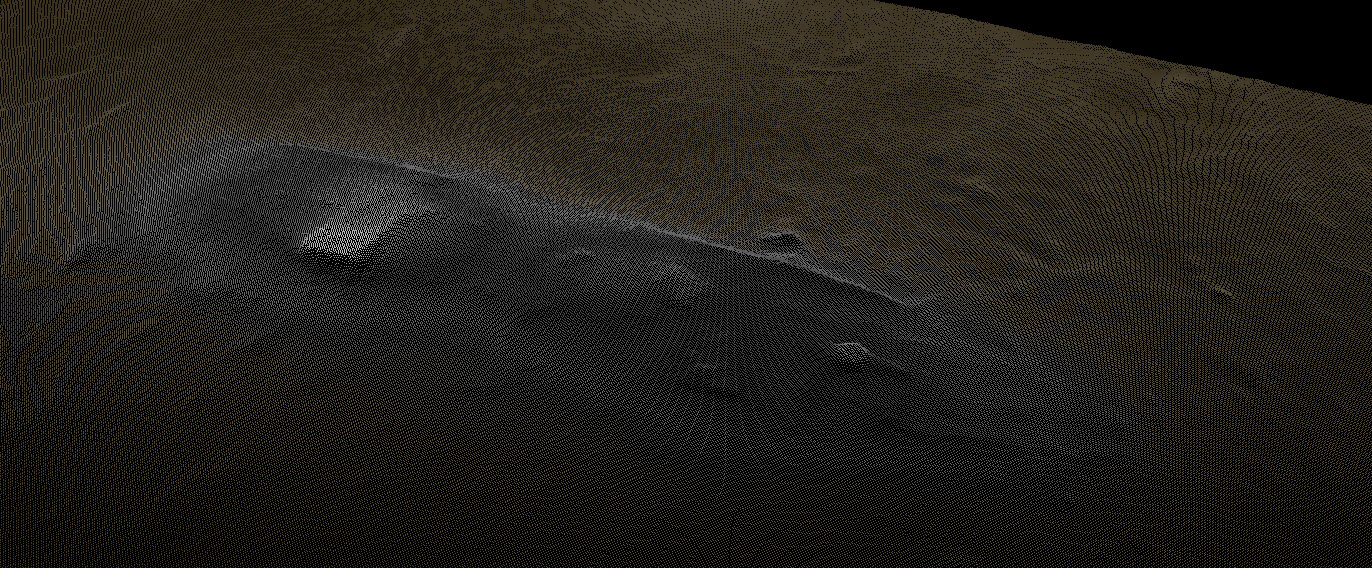
CSS Florida, from top

CSS Florida, starboard side
The Hampton Roads Naval Museum (HRNM) recently received these stunning 3-D images of the sloop-of-war USS Cumberland and the cruiser CSS Florida.  The images were taken by technicians from Adavanced Underwater Surveys, Inc., using their Wrecksight(TM) software during the June 2011 stabilization survey project of the two shipwrecks. The project was sponsored by the National Oceanographic and Atmospheric Administration's Marine Sanctuaries Division, the Naval History and Heritage Command's Underwater Archeology Division, and HRNM (also part of NHHC).  The Navy and NOAA conduct surveys like these to ensure that the sites have not been disturbed.

The ironclad CSS Virginia rammed and sank Cumberland on March 8, 1862 on the first day of the Battle of Hampton Roads. Shortly after being brought back from Brazil under tow, Florida sank just a few hundred yards away from Cumberland in 1864 under mysterious circumstances. 

Both wrecks under the protection of Federal law and artifacts from both vessels can be seen at the Hampton Roads Naval Museum.

Wednesday, June 29, 2011

NOAA/Navy Archeological Survey (and the answer to WWTT?: Simms)

NOAA and Navy to conduct archaeological survey of two Civil War shipwrecks in Hampton Roads, Va.

This is indeed very interesting news. The rest of the CWN150 team and I are very happy about the potential this project has to produce new findings and educate the public. And 3D maps? I am so excited!

On a different note, the answer to the Where Were They Then?: Simms post on 14 June: Simms was present at the Japanese visit to the Washington Navy Yard in 1860. Seaman Rob got the answer correct.

Tuesday, August 10, 2010

John Newland Maffitt-Former U.S. Naval Officer, Confederate Commerce Raider, Always the Southern Gentleman

Private and government owned commerce raiders in the 18th century and 19th century often went out of their way to treat their victims with the greatest respect. War may have been Hell, but that did not mean that the civilians caught in the middle, out in the middle of the ocean, had to suffer. Practically speaking, captains of commerce raiders had reputations to keep. As antiquated as communications were, word would get around the Seven Seas about a captain who mistreated captives. If caught, he would suffer severe consequences.

John Newland Maffitt, the commanding officer of CSS Florida, prided himself on always being a gentlemen in truest Southern sense of the word. On February 12, 1863, Florida intercepted the giant clipper ship Jacob Bell. Per protocol, Maffitt sent a boarding team over to inspect the ship and determine what to do with the vessel. His journal picks up the story from here:

“February 12-At 4 p.m., made a prize of the ship Jacob Bell, of New York. Her tonnage was about 1,300, and she is esteemed one of the most splendid vessels out of New York that trades with China.
A message came that the captain had ladies on board, and that his wife was on the eve of confinement [ed. note: she was about to have a baby]. Sent Dr. Garretson on board to investigate, and that the ladies must leave the ship, as I was determined to burn [Jacob Bell.] The ladies came aboard, and with tons of baggage. I surrendered the cabin. The party consisted of Mrs. Frisbee (captain’s wife), Mrs. Williams, whose husband is a custom-house officer at Swatow, China; a lad, Louis Frisbee, and another, son of a missionary from Rhode Island, now stationed at Swatow. The passengers and crew amounted to forty-three persons. The Jacob Bell had a cargo of choice tea, camphor, chowchow [ed. note: Chinese pickles, not the dog breed], etc. value at $2,000,000 or more.

Took such articles as we required, and on the 13th set her on fire.

Mrs. Frisbee was a very quiet, hind hearted lady; Mrs. Williams, I fancy, something of a tartar; she and Captain Frisbee were not on terms. They remained in possession of my cabin for five days, when I put the entire party on board the Danish brig Morning Star, bound to St. Thomas. If they speak unkindly, such a thing as gratitude is a stranger to their abolition hearts.”