Showing posts with label black sailors. Show all posts

Monday, February 11, 2013

African American Sailors of the Civil War Navy


February is African American History Month.  The celebration commemorates the many achievements of figures throughout the experience of the African diaspora.  It is a time to honor and reflect on the struggle faced by countless men and women over the last four hundred years.  Today, we remember those who had a voice, and others who did not.

Over the past two years, blog posts written about African American sailors included those individuals often featured in Civil War historiography.  More often than not, specific names pop up when discussing the role they played in the Union Navy.

On the website "Real African American Heroes,"  their list of notable figures includes a majority of Black Medal of Honor winners:  Robert Blake, William H. Brown, Wilson Brown, John Lawson, James Mifflin, and Joachim Pease.  The official NHHC website offers several other notable additions, including Robert Smalls, William Tilghman, and Aaron Anderson.  Although these men served "above and beyond the call of duty" during the war, they represent only a small fraction of the thousands of Black sailors who fought and died beside them.  Nearly two years into the sesquicentennial, have these familiar stories become familiar?  


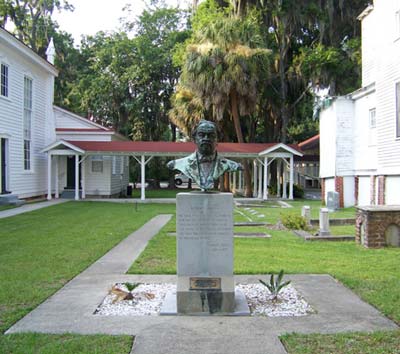
Monuments are erected around the country to honor individual units, regiments, and divisions of soldiers.  Sailors of the United States Navy did not have this luxury, as their "battle flag" was universal: the Naval Jack and Ensign (United States Flag).  Any monument or statue commemorating their role is relegated to specific individuals, such as Robert Smalls in Beaufort, SC.   The story of the ship's crew will undoubtedly stay that way.  As certain ships like the Monitor and Hunley receive more attention than others today, many individuals like those listed above will likely do the same.

Many of the images used to show Black sailors of the Civil War have also become repetitive.  Think about the collection of images describing Black sailors in the war.  A select few will stand likely out in your mind:  Siah Carter on the deck of the USS Monitor; crews on the decks of the Hunchback and Miami; "Kroomen" aboard the Sacramento.  The list goes on.  These images, frequently used in on book covers and program announcements, are branded in the minds of Civil War enthusiasts today.  


Other problems deal with depiction.  How can you actively depict a sailor when  no image exists?  The posters produced by the Navy in the 1970s are drawn from whatever scant accounts of the individual survived the war.  Some are better than others, while others show a poor depiction of the individual or their actions.  This is clearly shown in Medal of Honor winner Joachim Pease's poster shown below.


How can you depict the story of the African American sailor if no written documentation exists?  Besides the specific sailors listed above, one must take the story of the collective over the individual.  In many cases, it all comes back to the amount of documentation present in the historic record.  

Unfortunately, much of that documentation does not exist.  Much of their memory is preserved today in commentary or correspondence between flag officers and government officials.  The Federal Writers project did not come around to capture oral histories until the New Deal era, when many of these sailors were already deceased.  There is no time machine to go back and take more pictures or record oral histories of crew members.  It is simply not there.  We must go by what we have.  

Perhaps that is the beauty of history; taking the mass of photographs and accounts that survived the war and turning it into a narrative of history and heritage.  This is an ongoing project for CWN 150 staff and historians everywhere.  It is more important than ever to keep the memory alive of these men who fought one hundred and fifty years ago.

Share your thoughts with the CWN 150 staff here on the blog or on Twitter: @civilwarnavy.  Let us know what you would like for us to highlight this month on the CWN 150 blog.

Tuesday, February 14, 2012

In Case You Missed It: Black History Month Highlights

In honor of African American history month, here are all previous post links to our "African American History Month Highlights" postings over the past year.  We have also included the "Blacks in Blue Jackets" pamphlet as a .jpg so it is easy to download.  Enjoy:

Siah Carter (Originally Posted February 10, 2012)

A Trend Worth Following (Originally Posted February 6, 2012)

Honor, Courage, Commitment (Originally Posted February 27, 2011)

Aaron Anderson (Originally Posted February 25, 2011)

John Lawson (Originally Posted February 24, 2011)

Robert Blake (Originally Posted February 16, 2011)

William Tillman (Originally Posted February 14, 2011)

Lawson and Robert Smalls (Originally Posted February 7, 2010)

Introductory Post on African American Sailors (Originally Posted February 4, 2010)
 
Blacks in Blue Jackets: Page 1

Blacks in Blue Jackets: Page 2
A Note on African American History Month
Celebrated actor Morgan Freeman said it best in an interview o 60 minutes.  Freeman does not personally ascribe to terms like "Black History Month" or "African American History Month."  Instead, Freeman declared that "Black history is American history."  While there are those who agree and disagree on both sides, the sentiment is as true today as it was when it was originally created in the mid 1920s.  No matter what, we are all distinctly American.  The trials and tribulations of millions of citizens and soldiers both North and South 150 years ago tells us how far each side went to prove their beliefs and values.  At the cost of over 620,000 men, that dream was realized by the United States of America and Abraham Lincoln, the intrepid President who turned the country's greatest struggle into a moral, ethical, and military victory.  On the blood and toil of millions of soldiers and sailors around the world, the war ultimately brought about revolutionary change in the institution of slavery.  As a statement, the Emancipation Proclamation shifted the war's overall focus.  If there ever was doubt that the war began over the complicated nature of slavery, President Lincoln silenced any doubt with the Proclamation.  It became the necessary stepping stone to the post-war Amendments granting slaves their freedom. 

In what better anniversary lately can Americans come together and celebrate and commemorate the spirited role played by African Americans during the Civil War? 

Professor and historian Stephen Ramold, author of Slaves, Sailors, and Contrabands, summed up the role of African American sailors nicely in a 2004 interview with The Journal of African American History:  "They were Americans who didn't hesitate to fight for their country."  Whatever color you may be, we are all Americans.  Help to commemorate and honor those men and woman who fought to keep it that way.  Keep the discussion going in whatever way you can.  How do we celebrate?  Why do we celebrate?  I think the question speaks for itself. 

Sunday, February 27, 2011

African Americans in the Union Navy: Honor, Courage, Commitment


Crewmembers cooking on deck, in the James River, Virginia, 9 July 1862. Photographed by James F. Gibson.  The contraband sailor in the foreground of the image is Siah Carter.  

 A Call to Arms
USS Miami, 1864-1865


The enlistment of African Americans changed the makeup of the Union Navy, even if it often split public opinion.  Any attempt to block African Americans from entering the service were halted during the war, allowing them to swell the ranks.  One estimate placed roughly 16% of the total enlisted force as black.  "Rather than restrict black enlisted men to special units," historian James Harrod posited, the Navy "placed the races side by side in the same vessels as they had before the war."  Indeed, a prewar familiarity of black sailors on U.S. Navy ships existed since the American Revolution.  In all, approximately 185,000 African Americans served the Union cause during the Civil War.  Over 20,000 African Americans served in the Union Navy alone.


Proudly They Served

USS Sacramento "Kroomen" from Monrovia, Liberia, on board, in January-February 1867

African Americans fought in every naval campaign during the war, from the blockading squadrons of the Atlantic and Gulf to the brown water tributaries of the southern states.  Black women also played a role in the naval war, offering their services as nurses aboard the hospital ship USS Red Rover on the Mississippi River.  By war's end, eight African American sailors won the Congressional Medal of Honor, the highest military medal offered in the United States to this day.

After the War
Depicting Jim Crow
Restrictions to African American enlisted resumed once the war ended in 1865, flowing into the socially and racially troubled era of Jim Crow.  African Americans still remained a fixture in the peacetime Navy in the thirty years after the war, averaging between 10 and 14% of the total enlisted force.  The necessity of manpower and fresh recruits waned in the late 19th century, as society turned a blind eye to continued service of the African American sailor.  It is the service and dedication during the greatest American crisis, however, that is ultimately remembered and honored today.  Their honor, courage, and commitment provided the stepping stones to the official desegregation of armed forces in 1948.  African Americans continue the pride and tradition in today's United States Navy, owing much gratitude and thanks to those who tread a path of freedom and equality on land and at sea.     

Pictures are produced here courtesy of the Naval History and Heritage Command.

For more information on African Americans in the United States Navy, go HERE

Monday, February 14, 2011

Black History Month Highlight: William Tillman

"The Attack on the Second Mate." NHHC Photograph
The National and Department of Defense theme for this year's observance is "African Americans and the Civil War." In honor of this year's theme and every African American past and present in the United States Navy, we will be highlighting several African Americans who served during the American Civil War. Today, we will be highlighting civilian ship's cook William Tillman (also spelled William Tilghman).

This brief biography of William Tillman's courageous actions during the Civil War are reprinted here, courtesy of the Naval History and Heritage Command:

William Tilghman was serving as cook on board the American schooner S.J. Waring when she was captured by the Confederate Privateer Jefferson Davis at sea off the U.S. east coast on 7 July 1861. While she was en route to a Confederate port on 16 July, Tilghman, who as an African-American had every reason to fear for his future in Southern hands, used an axe to kill the prize crew and recapture the vessel. He then took S.J. Waring to New York City, where he received a hero's welcome. Reportedly, he later was given a six-thousand dollar award for his actions.
"Schooner 'S.J. Waring', Recaptured from the Pirates by the Negro Wm. Tillman," from Harpers Weekly 3 August 1861
The New York Tribune spoke highly of Tillman's bravery and conduct in the face of adversity:
"To this colored man was the nation indebted for the first vindication of its honor on the sea. Another public journal spoke of that achievement alone as an offset to the defeat of the Federal arms at Bull Run. Unstinted praise from all parties, even those who are usually awkward in any other vernacular than derision of the colored man, has been awarded to this colored man. At Barnum's Museum he was the center of attractive gaze to daily increasing thousands. All loyal journals joined in praise of the heroic act; and, even when the news reached England, the negro's bravery was applauded."
Please check back, as this is the first of many posts dedicated to African Americans serving in the Civil War.